The Karahisari Imperial Yasin-i Şerif (Limited Reserve Edition)
Limited Reserve Edition
Surah Yasin in the Calligraphy of Karahisari
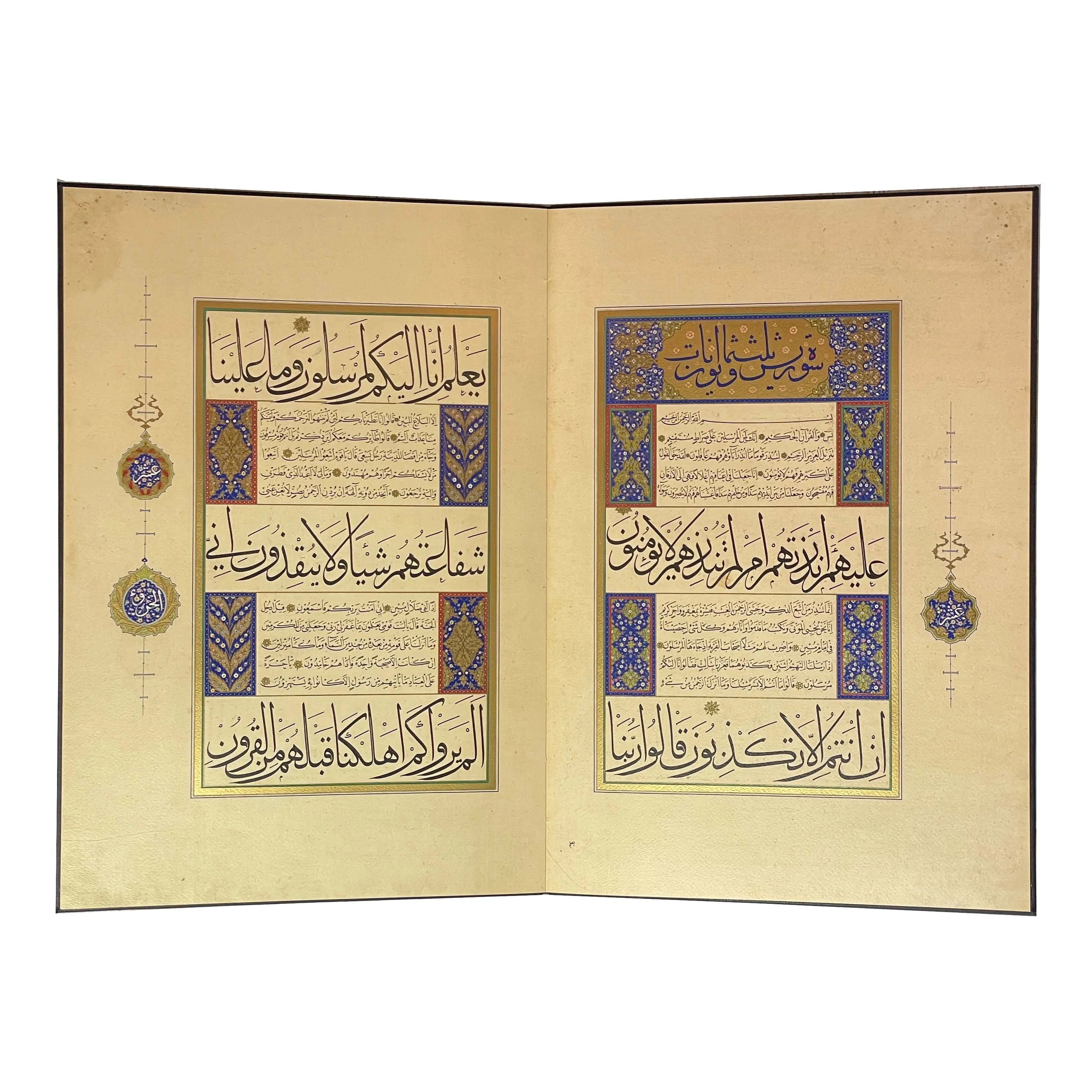
Expertly Crafted Facsimile, Leather-Bound, 62 x 42 cm
Ten Available
A faithful facsimile of the Karahisari manuscript
- Title of the Work:Ahmed Karahisari Yasin al-Sharif
- Calligrapher:Ahmed Karahisari, one of the greatest imperial calligraphers of the Ottoman era
- Historical Importance:Reproduced from an original composition by Karahisari, a master of the classical Ottoman calligraphic tradition who served at the court of Sultan Suleyman the Magnificent
- Artistic Value:A rare example of the art of husn al-khatt, carrying the elegance and refinement of the classical Ottoman writing tradition
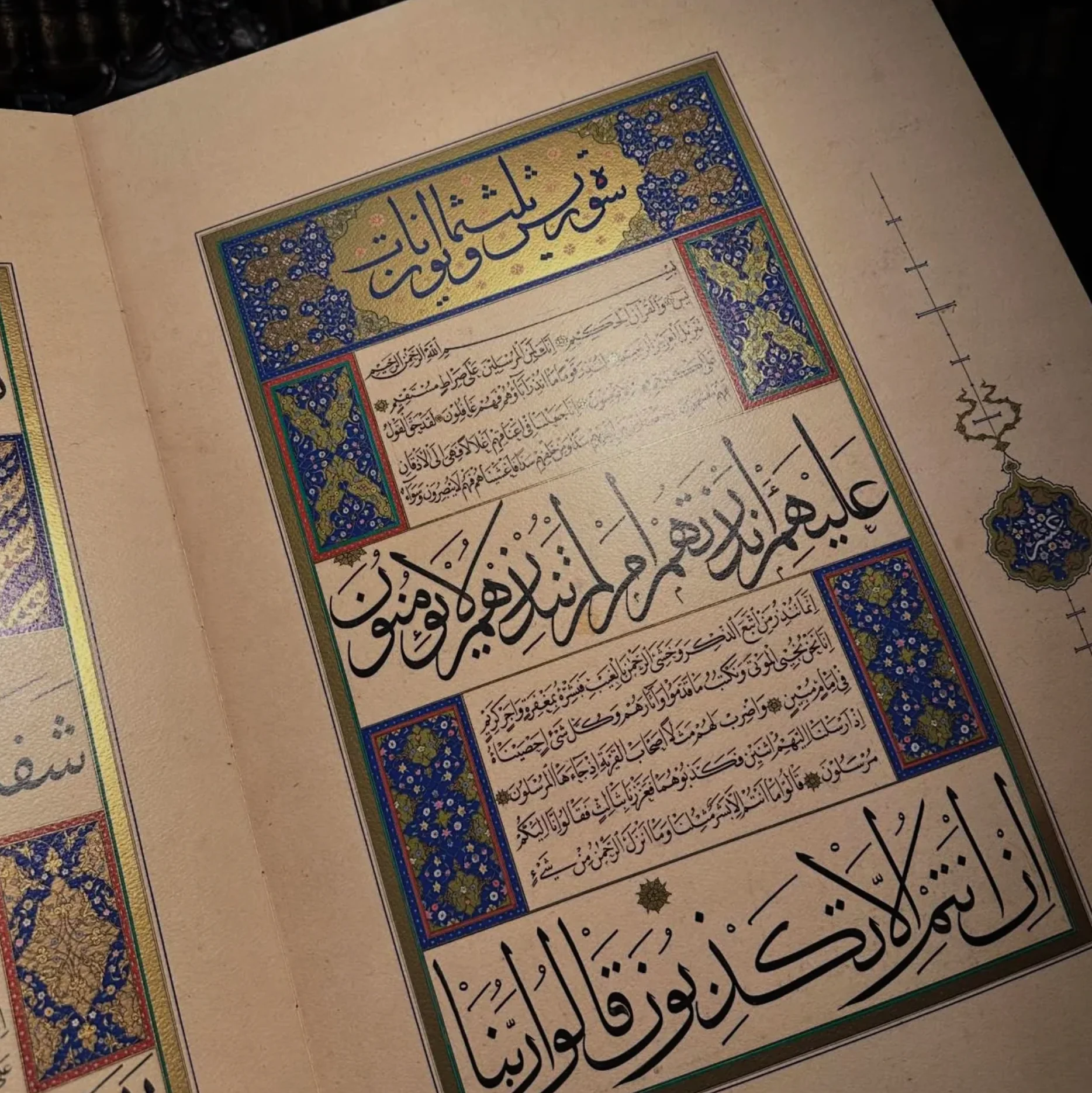
- Aesthetic Design:Balanced composition presented alongside illuminated tezhip ornamentation
- Collector's Piece:A valuable addition to any library for its spiritual weight as well as its artistic and historical significance
- Durable Craftsmanship:Produced on high-quality paper using special printing techniques for long-lasting preservation and use
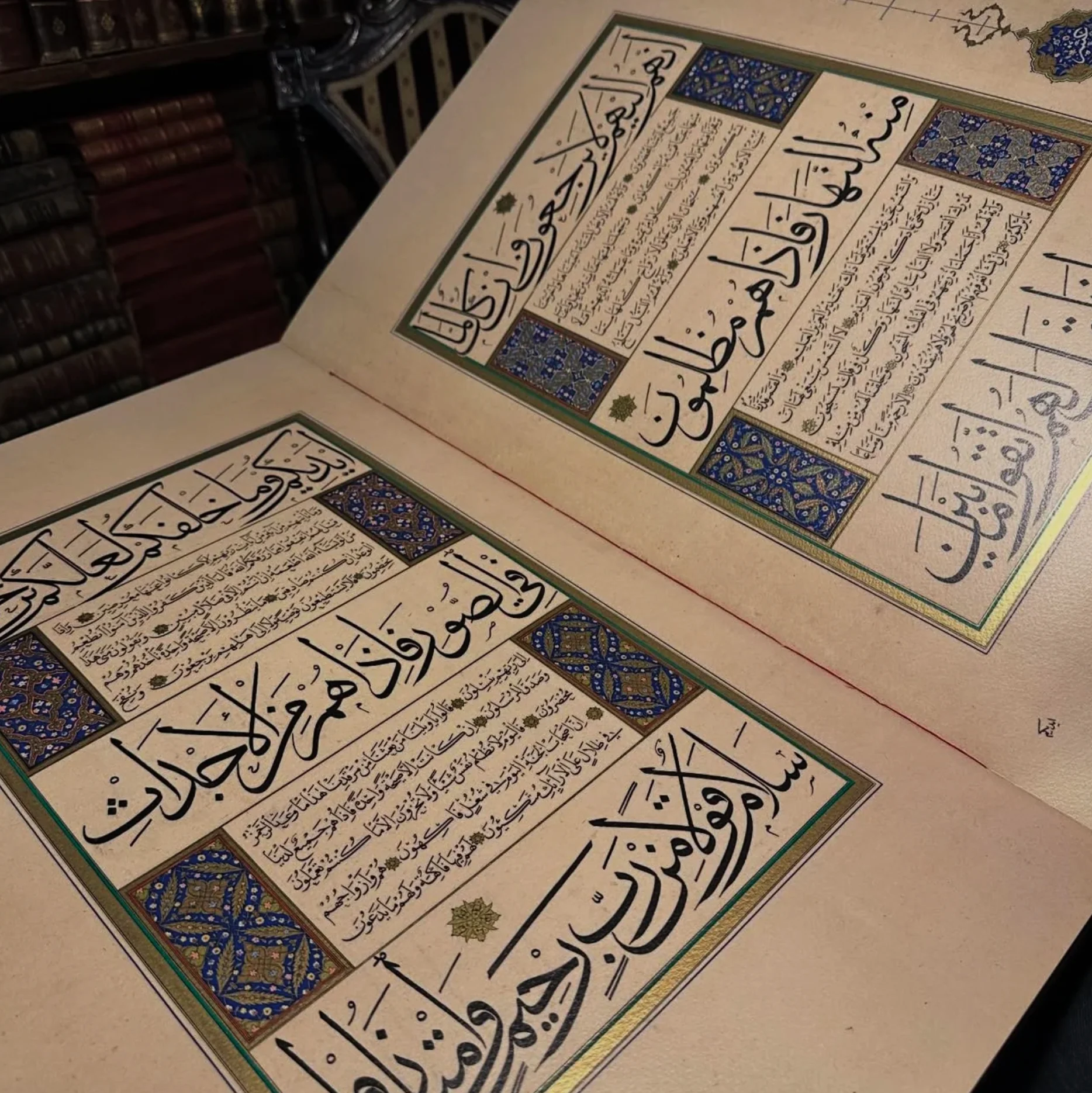
A facsimile edition of the Surah Yasin from the Mushaf al-Sharif of Ahmed Karahisari, specially prepared and printed in a limited run. Each copy is expertly crafted and bound in leather, reproducing the scale and presence of the original.
The Calligrapher
Ahmed Karahisari is believed to have been born in Afyonkarahisar around the year 873 AH. Little is known about his early life. During the reign of Sultan Bayezid II he travelled to Istanbul in pursuit of knowledge and remained there until his death. He studied the Aqlam al-Sittah under Esedullah Kirmani and rose to great renown in the field of calligraphy.
Karahisari affiliated himself with the Halveti shaykh Cemaleddin Ishak Karamani and received khilafah from him. He was known throughout his life for his simple manner and his love of the poor. He passed away in 963 AH at approximately ninety years of age and was buried in the cemetery of the Shaykh Ishak Cemaleddin Karamani Tekke.

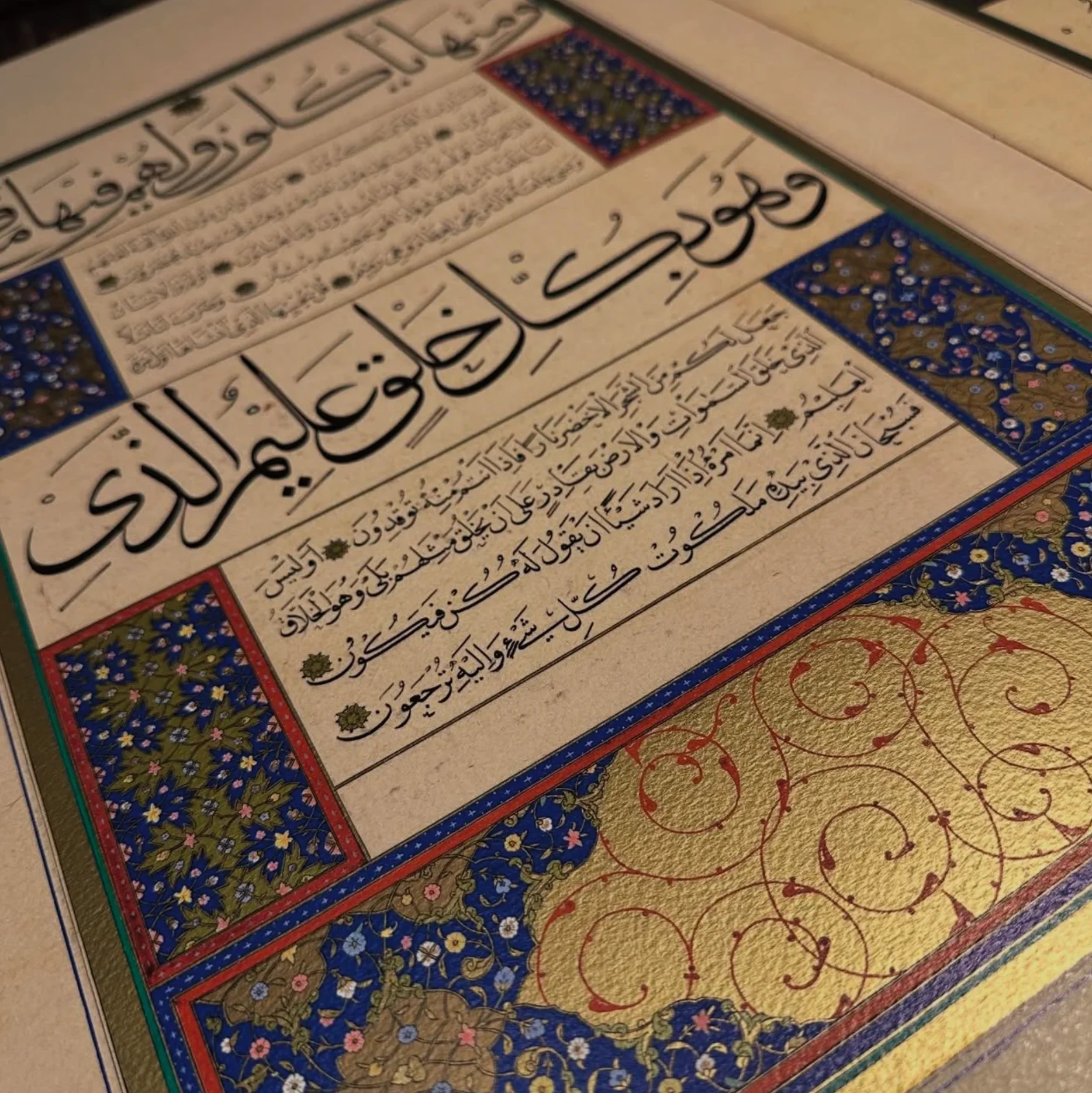
Detail of the illuminated tezhip ornamentation
The Sun of Calligraphy
His script reached full maturity during the reign of Sultan Suleyman the Magnificent, when the Ottoman Empire stood at its zenith. By achieving finer proportions in letterforms and compositions, he developed a distinctive manner that became known as the "Karahisari style." Artists and craftsmen of the period gathered around him, and his fame spread under the title Shams al-Khatt, the Sun of Calligraphy. The compositions he arranged with extraordinary mastery and precision became exemplary models for later calligraphers.
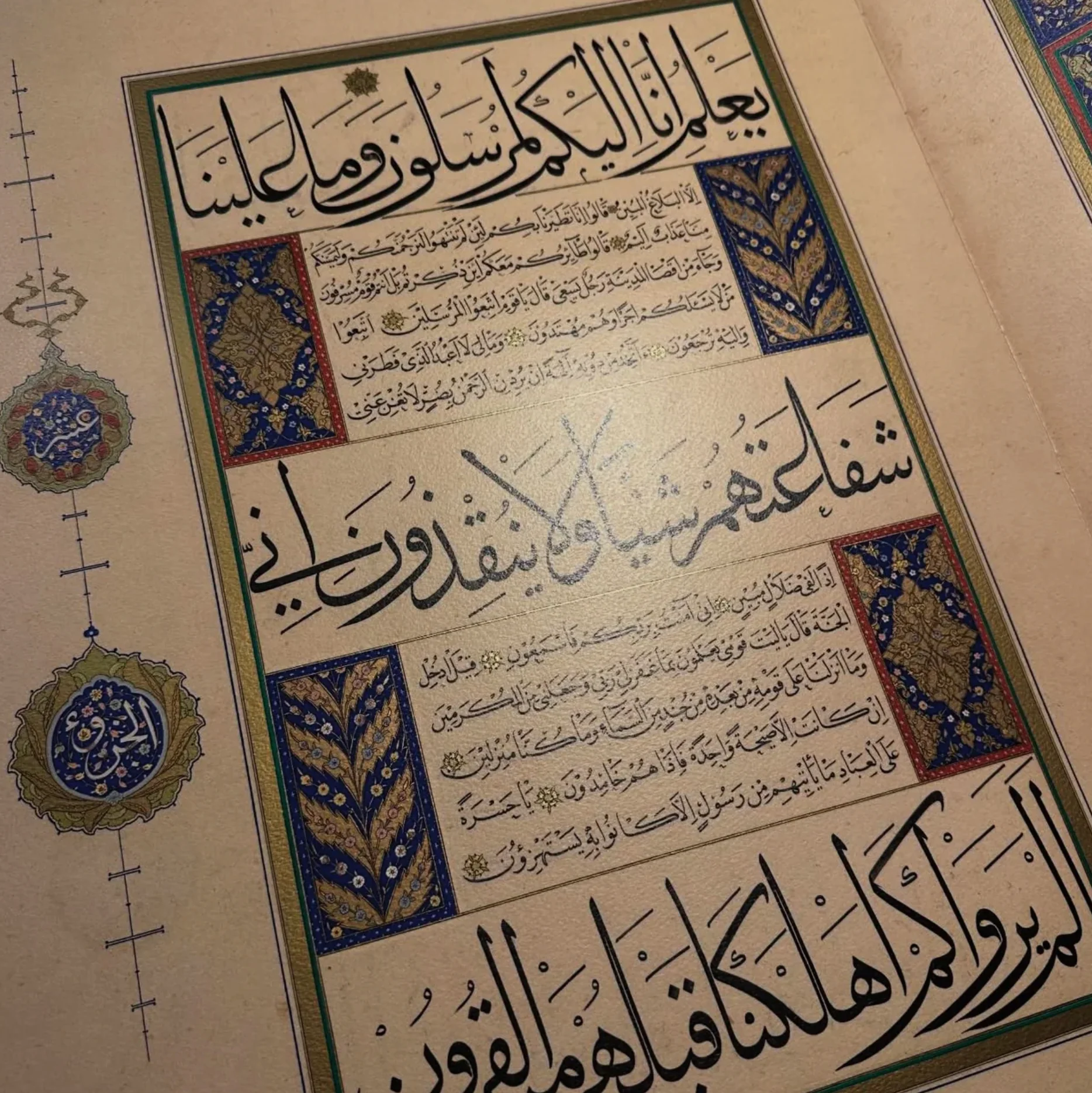
He introduced a unique aesthetic dimension to the art by outlining letters written in gold ink with black ink, and letters written in black ink with gold ink. He worked across the Aqlam al-Sittah, producing Mushafs, Anam collections, prayer compilations, and murakkaat.

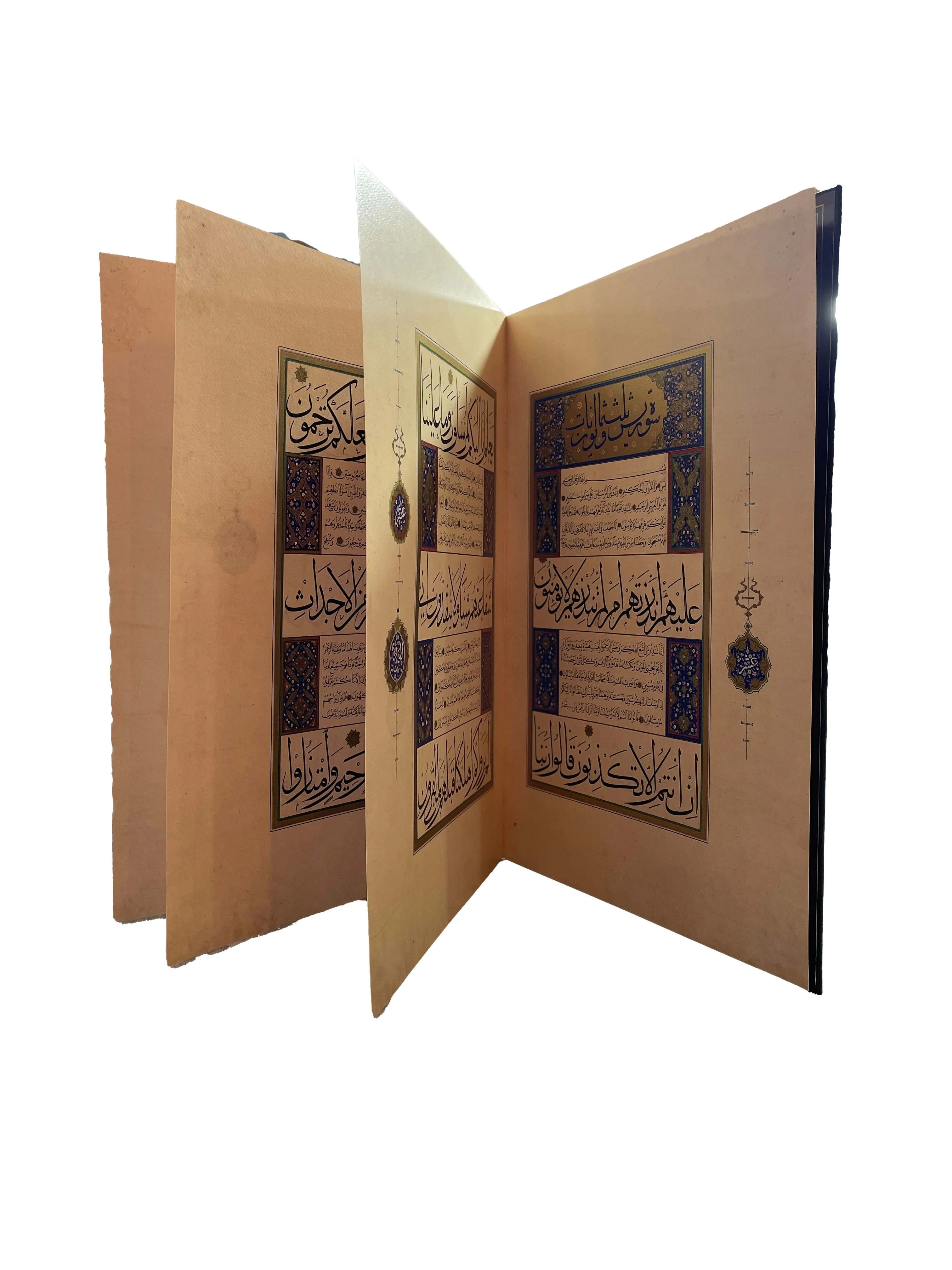
Pages reproduced at 62 x 42 cm, true to the original scale
Surviving Works
Among his surviving works are a large-format Mushaf preserved in the Topkapi Palace Museum Library, along with various calligraphic panels, murakkaat, and Anam al-Sharif manuscripts in the same collection. Copies of the Qur'an, Anam al-Sharif, and Yasin al-Sharif are housed in the Museum of Turkish and Islamic Arts. Two Anam al-Sharif manuscripts are preserved in the Suleymaniye Library. A Mushaf al-Sharif is registered in the Istanbul University Library. A practice murakka dated 941 AH is preserved in the Afyonkarahisar Museum. And the towering dome inscriptions of the Suleymaniye Mosque were written at the command of Sultan Suleyman the Magnificent himself.
His adopted son, Hasan Celebi, became the most famous of his students and carried the Karahisari tradition forward into the next generation.
This Facsimile
The present extract of Surah Yasin is a superb example of his service to the Book of Allah. This precious masterpiece of Qur'anic art will bring blessings and inspiration to any Muslim fortunate enough to own it.

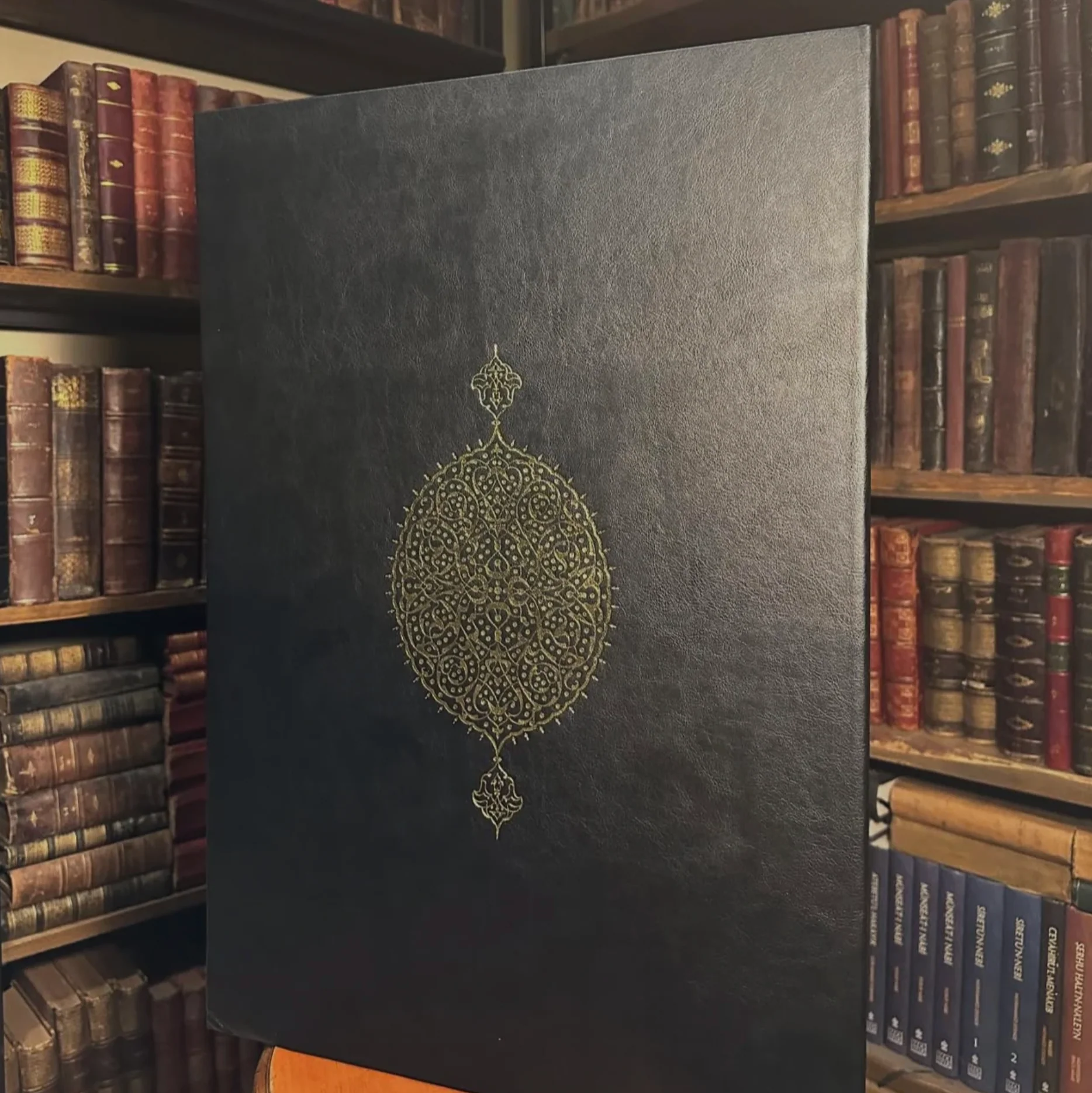
Hand-bound in leather with expert craftsmanship
About Surah Yasin
Surah Yasin is the 36th surah of the Holy Qur'an and contains 83 verses. Revealed in Makkah, it carries some of the most central themes of the revelation: the oneness of Allah, the truth of prophethood, and the certainty of the resurrection.
The Messenger of Allah ﷺ called Surah Yasin "the heart of the Qur'an." It has long been recited in Muslim households at gatherings of remembrance, beside the sick and the dying, and in the quiet hours of the night. This facsimile places the surah in the home as both an object of recitation and a sign of love for the Word of Allah.
Only Ten Copies Available
Description
Limited Reserve Edition
Surah Yasin in the Calligraphy of Karahisari
Expertly Crafted Facsimile, Leather-Bound, 62 x 42 cm
Ten Available
A faithful facsimile of the Karahisari manuscript
- Title of the Work:Ahmed Karahisari Yasin al-Sharif
- Calligrapher:Ahmed Karahisari, one of the greatest imperial calligraphers of the Ottoman era
- Historical Importance:Reproduced from an original composition by Karahisari, a master of the classical Ottoman calligraphic tradition who served at the court of Sultan Suleyman the Magnificent
- Artistic Value:A rare example of the art of husn al-khatt, carrying the elegance and refinement of the classical Ottoman writing tradition
- Aesthetic Design:Balanced composition presented alongside illuminated tezhip ornamentation
- Collector's Piece:A valuable addition to any library for its spiritual weight as well as its artistic and historical significance
- Durable Craftsmanship:Produced on high-quality paper using special printing techniques for long-lasting preservation and use
A facsimile edition of the Surah Yasin from the Mushaf al-Sharif of Ahmed Karahisari, specially prepared and printed in a limited run. Each copy is expertly crafted and bound in leather, reproducing the scale and presence of the original.
The Calligrapher
Ahmed Karahisari is believed to have been born in Afyonkarahisar around the year 873 AH. Little is known about his early life. During the reign of Sultan Bayezid II he travelled to Istanbul in pursuit of knowledge and remained there until his death. He studied the Aqlam al-Sittah under Esedullah Kirmani and rose to great renown in the field of calligraphy.
Karahisari affiliated himself with the Halveti shaykh Cemaleddin Ishak Karamani and received khilafah from him. He was known throughout his life for his simple manner and his love of the poor. He passed away in 963 AH at approximately ninety years of age and was buried in the cemetery of the Shaykh Ishak Cemaleddin Karamani Tekke.
Detail of the illuminated tezhip ornamentation
The Sun of Calligraphy
His script reached full maturity during the reign of Sultan Suleyman the Magnificent, when the Ottoman Empire stood at its zenith. By achieving finer proportions in letterforms and compositions, he developed a distinctive manner that became known as the "Karahisari style." Artists and craftsmen of the period gathered around him, and his fame spread under the title Shams al-Khatt, the Sun of Calligraphy. The compositions he arranged with extraordinary mastery and precision became exemplary models for later calligraphers.
He introduced a unique aesthetic dimension to the art by outlining letters written in gold ink with black ink, and letters written in black ink with gold ink. He worked across the Aqlam al-Sittah, producing Mushafs, Anam collections, prayer compilations, and murakkaat.
Pages reproduced at 62 x 42 cm, true to the original scale
Surviving Works
Among his surviving works are a large-format Mushaf preserved in the Topkapi Palace Museum Library, along with various calligraphic panels, murakkaat, and Anam al-Sharif manuscripts in the same collection. Copies of the Qur'an, Anam al-Sharif, and Yasin al-Sharif are housed in the Museum of Turkish and Islamic Arts. Two Anam al-Sharif manuscripts are preserved in the Suleymaniye Library. A Mushaf al-Sharif is registered in the Istanbul University Library. A practice murakka dated 941 AH is preserved in the Afyonkarahisar Museum. And the towering dome inscriptions of the Suleymaniye Mosque were written at the command of Sultan Suleyman the Magnificent himself.
His adopted son, Hasan Celebi, became the most famous of his students and carried the Karahisari tradition forward into the next generation.
This Facsimile
The present extract of Surah Yasin is a superb example of his service to the Book of Allah. This precious masterpiece of Qur'anic art will bring blessings and inspiration to any Muslim fortunate enough to own it.
Hand-bound in leather with expert craftsmanship
About Surah Yasin
Surah Yasin is the 36th surah of the Holy Qur'an and contains 83 verses. Revealed in Makkah, it carries some of the most central themes of the revelation: the oneness of Allah, the truth of prophethood, and the certainty of the resurrection.
The Messenger of Allah ﷺ called Surah Yasin "the heart of the Qur'an." It has long been recited in Muslim households at gatherings of remembrance, beside the sick and the dying, and in the quiet hours of the night. This facsimile places the surah in the home as both an object of recitation and a sign of love for the Word of Allah.
Only Ten Copies Available